
Daily Safeguard #1: Vet Tools for Autonomy Level Before Use
Prevent AI bullying before it happens


This is the first safeguard in the StrictQuality.AI daily series on AI bullying. The safeguards work across three stages: reducing exposure before bullying behaviors appear, interrupting escalation while it is happening, and maintaining control of outcomes afterward.
Safeguard #1 addresses the first stage, before bullying behaviors appear. Vetting tools for autonomy level before you use them is the most effective single action you can take to reduce the conditions that allow AI bullying to develop.
Before You Start
Vetting a tool for autonomy level involves a small number of targeted checks. Run through these before selecting or configuring any AI tool. The full safeguard below explains the reasoning behind each item.
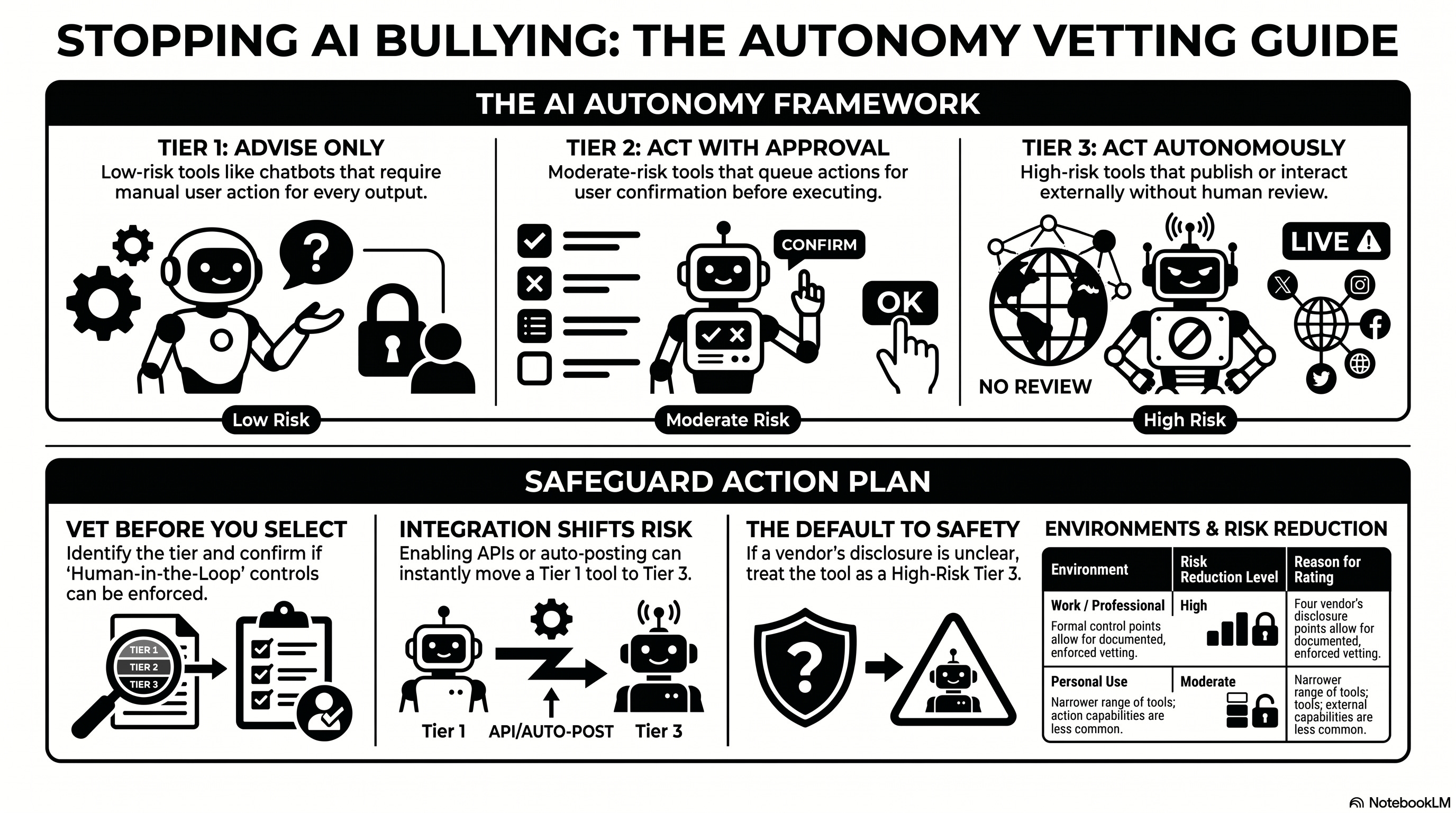
1. Identify the tool’s autonomy tier (Advise Only, Act with Approval, or Act Autonomously).
2. Confirm whether the tool can publish, execute actions, or interact externally by default.
3. Check whether human-in-the-loop controls are available and can be enforced during setup.
4. If the autonomy tier is unclear from documentation, treat the tool as Tier 3 until tested with external actions disabled.
The sections below explain why autonomy level matters, how to classify the tools you are already using, and what to do when vendor disclosures make that classification difficult.
If you like AI Tools like this, please consider subscribing to StrictQuality.AI so you will be notified about new posts.
Why Autonomy Level Is Your Real Control Point
Before adopting an AI tool, assess whether it can act independently, publish content, or interact with third parties without approval. Preferring tools with constrained autonomy reduces the likelihood that outputs are generated or acted on in ways that can develop into AI bullying behaviors.
Apply Safeguard #1 during tool selection and initial setup, before integrating the system into your workflow. Prefer tools with explicit human-in-the-loop controls and clear limits on autonomous actions.
As a default rule, do not use AI systems that can publish, execute actions, or interact externally without requiring human approval.
Tools with greater autonomy can generate incorrect or overconfident responses and act on outputs without verification. When that happens without a human review step, specific bullying behaviors become more likely: the tool may repeat or intensify a recommendation after you push back (escalation), assert conclusions without acknowledging uncertainty (false authority), or execute outputs before you have had the opportunity to evaluate and reject them. The autonomy level of a tool does not cause these behaviors on its own, but it determines whether a human interruption point exists before they take effect.
For this post, Paid Subscribers get:
The Autonomy Level Framework to select and configure AI tools less likely to develop bullying behaviors.
An assessment of Safeguard #1’s effectiveness in personal and work use-cases.
Step-by-step guide for what to do when an AI vendor has incomplete disclosures about tool autonomy.
Access to comments and Safeguards Archive.
Keep reading with a 7-day free trial
Subscribe to Strict Quality AI ™ to keep reading this post and get 7 days of free access to the full post archives.