
Local Residents Stop Entrepreneur's Proposed Data Center Near Protected Wetlands
But was this just the first round?

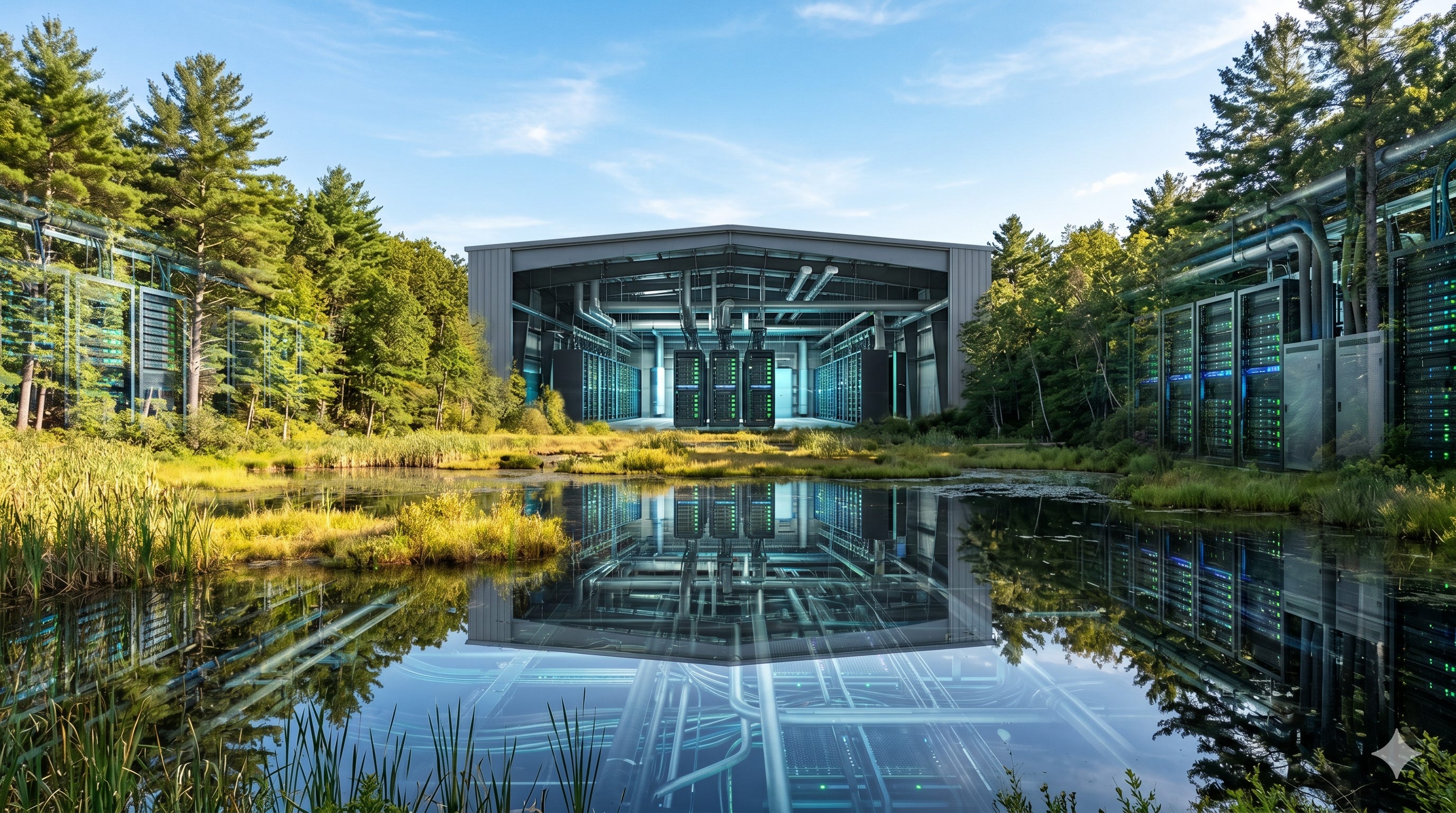
Across the U.S., local communities are resisting local AI data center projects.
A national Gallup survey from March 2026 found that more than 70% of Americans oppose local construction of AI data centers.
According to the research organization Data Center Watch, $64 billion worth of projects were blocked or delayed across the U.S. between May 2024 and March 2025. For example, in March 2026 a proposed data center near Apex and New Hill, North Carolina was withdrawn by the developer after organized community pushback. The town of Nottingham New Hampshire went through a similar struggle in May of 2026.
But the Gallup survey also found about 25% of Americans support building AI data centers in their community.
Clearly, the lessons from one community’s experience cannot by themselves prove that another data-center proposal is good or bad.
In a series of articles, StrictQuality.AI is examining the different experiences of two towns: Nottingham, New Hampshire, and Broadview, Montana.
In an upcoming article, we’ll examine the Quantica Data Campus Project in Broadview. Residents there are not unified in their views about it; project opponents face dismissive, even hostile, pushback from local government and the developer’s lobbyist.
But first we go to Nottingham, where residents, with support from their local politicians, successfully mobilized in May 2026 against a proposed data center.
If you like evidence-based reporting like this, please consider subscribing to StrictQuality.AI so you will be notified about new posts.
Why a Data Center in Nottingham and How Did the Community Get It Stopped?
Located in the Seacoast region of New Hampshire, Nottingham was incorporated in 1722 and is known as the first town in America to make recycling mandatory.
Tom Moulton is a Seacoast businessman, award-winning entrepreneur, and developer. He owns the 100-acre Nottingham Business Center or Nottingham Business Park. Moulton purchased the land in 2021 for $900,000 after the town of Nottingham seized it in 2017 due to non-payment of taxes by the previous owner, USA Springs.
The site houses an existing 200,000-square-foot warehouse, but there are no businesses currently operating on the property.
April 29, 2026
Moulton signed a preliminary conceptual application with the town of Nottingham to convert his Nottingham Business Park warehouse into a data center. In addition to his broader belief that data centers are necessary for the future, he highlighted a few specific reasons for pursuing the project at the Nottingham site:
He already owns the land and infrastructure: His plan was simply to convert the existing building, meaning no new construction was envisioned for the site.
The location is isolated: Moulton pointed out that the property is “fairly remote” and reasoned that a facility there “shouldn’t interfere with population centers”.
It would generate local revenue: He argued that once the facility was operational, it would provide more taxes for the town of Nottingham.
Additionally, Moulton was exploring this development “on spec“, meaning he did not have a specific tech firm lined up as a tenant. Instead, he chose to evaluate his own property’s potential to host a future client, expecting to personally lay out tens of millions of dollars to develop it.
May 20, 2026
The investigative news site InDepthNH.org published an article revealing the plans, acting as a catalyst for public awareness.
Backlash spread virally through grassroots channels, social media, and community networks.
Critics of the project argued that industrial runoff or chemical discharge from the facility could threaten the Lamprey River Watershed and surrounding lakes. In addition to the Lamprey River Watershed, the proposed data center could impact several other critical environmental features in the area:
The Local Aquifer and Private Water Supply: The massive volume of water required to cool the data center would place an extreme draw on the area’s aquifer. Because almost all residents in Nottingham rely on private wells for their water, there is immense concern that the massive amount of water needed to cool the data center systems would deplete this shared resource. According to local resident Rudy Pavlesich, this would be a significant problem because some locals already had to drill deeper wells to access water.
Sensitive Wetlands: The 100-acre property where the facility is proposed contains 30 to 40 acres of highly sensitive wetlands. Much of the land at the site cannot be developed due to the presence of these ecological features.
Surrounding Lakes: Along with the Lamprey River, the surrounding local lakes are threatened by potential pollution from industrial runoff or the release of chemical-containing wastewater generated by the facility’s cooling systems.
Air Quality and Fire Risk: Environmental concerns also extend to the air and surrounding forests, with protesters raising alarms over the potential for toxic fumes and wildfires.
The potential severity of environmental degradation was one of the primary reasons residents vehemently opposed the data center development. An online petition rapidly garnered over 25,000 signatures.
Brad Weit, a Newmarket resident and outdoorsman, started the online petition against the proposed data center because he was deeply concerned about the toll that artificial intelligence demands could take on the nation’s power grid and energy supply. By building these facilities, Weit said, society is “sacrificing our real, physical environment for a virtual one“.
The petition quickly gained traction, collecting over 25,000 signatures and becoming a central rallying point for broader community pushback against the project. Weit explained,
“I really did not think the petition would get so much attention, but seeing people come together despite political differences has made me very proud of my community.”
Through the petition and subsequent protests, residents voiced several specific objections to the proposed AI data center, including:
Massive Resource Consumption: Residents and officials expressed deep concern over the tremendous electricity and water usage required to power and cool an AI data center. Many feared it would severely strain local private well water supplies.
Spiking Utility Costs: Opponents warned that necessary upgrades to the regional electrical grid would drive up monthly electric bills for local consumers.
Environmental Degradation: The 100-acre site contains highly sensitive wetlands, leading to fears that industrial runoff, chemical discharge, and noise pollution could threaten the Lamprey River Watershed, local lakes, and residential property values.
Lack of Economic Benefit: Despite tens of millions of dollars in development costs, the highly automated facility would create very few permanent on-site jobs. Developer Tom Moulton estimated that despite costing tens of millions of dollars to build, the facility would be highly automated and therefore only generate a “few on-site jobs once online”.
Regulatory Voids: Critics highlighted that New Hampshire currently lacks statewide definitions and regulations for data centers, and recent legislative efforts to grant towns local zoning authority over them were defeated by pro-AI legislators.
State Rep. Paul Tudor, Northwood Republican & former GE engineer, emphasized that the overwhelming pushback was coming directly from genuine local residents, rather than from automated mass emails. He pointed out:
“I heard nothing good from any constituent about this... A lot of times I’ll get emails that are, you know, chain emails that are just being dumped to the Legislature, but these were all local people. And there wasn’t one person that was for this.”
New Hampshire Governor Kelly Ayotte strongly opposed the proposed AI data center in Nottingham, reflecting high-level political resistance to the project. In a statement provided to Seacoastonline on May 26, 2026, she criticized the development of data centers in the state:
“Energy costs are already too high in New Hampshire, and data centers have the potential to cause them to skyrocket. It makes no sense to site data centers in our state without more energy to support them, and we have to give local communities a say in this process. Without additional energy sources, I can’t support building data centers here.”
May 27, 2026 (Afternoon)
Hours before a scheduled planning board meeting, Moulton’s legal counsel withdrew the application “without prejudice”, meaning he can legally revisit the project later.
Moulton discussed the community pushback to the Nottingham data center (Link1, Link2):
“I kind of didn’t expect this at all, to be honest with you. It’s kind of taken on a life of its own. I’m very surprised, a little disappointed.”
“We had to stop and say, OK, what are they concerned about, and let’s try to get some answers to some of these concerns. Frankly, if we can’t satisfactorily address them in a reasonable fashion, then we’ll go and do something else.”
“I know there’s a lot of controversy or angst about data centers... I think it’s a natural fact of business and of life that this is where it’s going.”
State Rep. Scott Bryer, Northwood Republican who attended the Nottingham planning board meeting, said he had received numerous calls and emails from constituents regarding the data center proposal. To emphasize the clear and united message he received from the public, which he interpreted as a definitive rejection of the data center, he said, “This community does not want this.”
May 27, 2026 (Evening)
Anticipating large crowds, the town moved the meeting to a local school gymnasium. Despite the project’s withdrawal, hundreds of protesters still gathered to voice their opposition to the data center.
Adam Whittier is a Manchester resident who attended the protest outside the Nottingham School. He expressed his apprehension about the unregulated and rapid expansion of artificial intelligence, in addition to his concerns regarding the data center’s potential impact on the environment and electricity prices:
“There is no situation in which I want a data center in this state. Aside from the very real physical resource issues … I think we need to have more frank discussions about AI before we start building these things. I think there are only reasons not to do this right now.”
Christine Dellas, Raymond resident and protester outside the Nottingham School, responded to the developer’s claim that he would do more research to address the community’s concerns. She emphasized that no amount of further research or discussion would change her mind, and that she simply wanted the project stopped:
“I mean, I get that we all use social media, we all use, you know, (data) storage and everything else. But I think this is primarily to support AI, which I’m not sure why we need.”
“I don’t want it built, period. I don’t know if there’s really much to discuss.”
The Current Status of the Nottingham Data Center
There is no active data center development application currently pending with the town.
When developer Tom Moulton withdrew his conceptual application on May 27, he did so “without prejudice,” meaning he legally retains the right to bring a modified proposal back to the town at a later date. It is entirely possible that the proposal to develop the Nottingham Data Center will be re-submitted, though it is not guaranteed.
Moulton has stated he will continue researching and evaluating the property to see if he can adequately address the public’s widespread concerns regarding noise, water, air, and environmental impacts before returning to the planning board with appropriate answers. He explained,
“ I think all those concerns are valid: Noise, water, air, and the impact on the environment, and that’s why we’re taking the time to evaluate with facts, not opinions, what we need to do to address those concerns for the public... The reality is we’re gonna need these places for the future. If not New Hampshire, where?”
He currently has no timeline for when he might reintroduce the idea.
Crucially, Moulton also admitted that if he cannot find a way to “satisfactorily address” the community’s concerns “in a reasonable fashion,” he will abandon the data center idea and “go and do something else”.
Despite the temporary withdrawal, many local protesters remain vigilant, feeling that the project has not been “decisively averted”. This apprehension is amplified by the fact that, due to the failure of NH Senate Bill 439, Nottingham currently lacks the state-enabled zoning authority to legally block a future data center proposal if Moulton ultimately decides to resubmit his application.
Pulling the Rug Out from Under Senate Bill 439
Senate Bill 439 (SB 439) was a legislative effort introduced by State Sen. Debra Altschiller and supported by State Rep. Hope Damon to address a major regulatory void: currently, New Hampshire law does not have a legal definition for data centers. Because the state requires "enabling statutes" before towns can address specific zoning issues, municipalities currently have no legal authority to create local ordinances or set guardrails on data center projects. SB 439 aimed to finally give local communities the regulatory power they needed.
However, when the bill went through the House Committee on Municipal and County Government, “pro-AI legislators” and data center advocates introduced a divisive amendment that explicitly limited towns' abilities to locally regulate data centers, completely gutting the bill's original purpose and making it easier for developers to build them in the state.
Because the amendment reversed the bill's protective intent, SB 439 was ultimately defeated by a decisive vote in the House of Representatives earlier this year.
Currently, New Hampshire has no legal definition for data centers on the books. As State Rep. Hope Damon explained, "We don’t have anything that enables the municipalities to put regulations in place, and the state doesn’t have any regulations". Damon, a Croydon Democrat, said local municipalities like Nottingham do not have the legal authority to create their own zoning ordinances or establish guardrails to manage these types of projects.
The failure of SB 439 leaves the town with virtually no legal authority to regulate or stop the facility. As a direct result of this regulatory void, even if Nottingham’s officials and residents vehemently oppose developer Tom Moulton’s proposed data center, there is little they can legally do to stop it through local zoning ordinances.
This vulnerability has prompted opponents of the Nottingham project to call for new statewide rules. For example, local petition organizer Brad Weit publicly stressed the urgent need to pass legislation to address similar data center proposals across New Hampshire in the future.
New Hampshire politics is searching for the right regulatory mix. State Sen. Howard Pearl, Loudon Republican who represents Nottingham as part of Senate District 17, is emphasizing the need to strike a balance between regulating new data centers and protecting local utility ratepayers. He noted that the energy demands of data centers should be offset by private investments in energy infrastructure so that Granite Staters are not burdened with subsidizing the electrical costs:
“New Hampshire should absolutely be open to large AI and cloud computing data centers and next generation digital infrastructure, but growth must be responsible and sustainable. Our state already faces some of the highest energy costs in the country. Granite Staters should not be forced to subsidize massive new electrical demand from large AI and cloud computing data centers.”
Takeways
The Nottingham Data Center Struggle highlights the importance of:
Local investigative journalism. If they hadn’t broken the story about the data center proposal, the community might not have had the time or knowledge required to mobilize, voice their concerns, and successfully halt a major industrial development before it advanced further.
Local community activism. The scale of grassroots opposition was clearly heard by local officials and directly forced developer Tom Moulton to withdraw his proposal just hours before a scheduled planning board meeting.
Local and state-level political support. Local political leaders serve as amplifiers for grassroots activism.
Evidence-based regulatory processes governing data center development. Relying on concrete evidence shifts the conversation from emotional reactions to objective problem-solving. Factual, scientific evaluations are crucial to prevent irreversible ecological damage, infrastructure strain, and unfair costs while planning for sustainable growth.
Legislative reform relevant to the Age of AI. In many regions, the rapid advance of artificial intelligence has significantly outpaced existing legal and regulatory frameworks. Without state-level legislative reform, local municipalities are left completely legally defenseless, lacking the authority to enact local zoning ordinances or set guardrails on AI projects.
Generally, the lessons from a community’s response to a local data center proposal can be useful guides for other towns, teaching:
What questions to ask,
What documents to examine,
What risks to test, and
Where public trust can break down.
Local governments and residents will be asked to make decisions about infrastructure whose effects may extend beyond the project site. These decisions will require evaluating power demand, water use, utility costs, backup generators, noise, emissions, emergency services, grid upgrades, ratepayer exposure, and long-term community compatibility. Technical evidence will be more effective than generalized objections.
A town may welcome technology investment and still need enforceable rules for diesel generators, cooling systems, building scale, and grid impacts. Local governments must avoid being trapped by outdated zoning categories.
A developer may have a promising site on paper and still face a serious project risk if residents believe the proposal’s operating burdens were not disclosed clearly or early enough. Developers need to treat community consent and municipal readiness as core project risks, not merely public-relations issues.
Nottingham’s experience with the proposed data center has useful lessons for any town in a similar situation, but the unique circumstances in another community will significantly affect attitudes and outcomes there. The details will differ from place to place, but the core challenges will likely be similar everywhere.
Coming Soon from StrictQuality.AI
Our upcoming article in this series examines the Quantica Project in Broadview, MT, where the community is divided about a proposed 5,000 acre data center campus. Opponents to the project are not getting traction at all and are being treated dismissively by local government and industry representatives.
We’ll unpack the Quantica data center project next time.
If you like evidence-based reporting like this, please consider subscribing to StrictQuality.AI so you will be notified about new posts.